
How to Protect Appliances and Electronics From Power Surges in a Hurricane
During hurricane season, your area’s electrical grid may face power outages from winds and lightning strikes. As the power is restored, the electrical voltage can spike, causing significant damage to your electronics and home appliances. How can you protect your expensive and valuable appliances and electronics from damage? This guide provides tips on how to protect your home’s appliances and electronics from damaging power surges caused by a hurricane.
What Is a Power Surge?
A power surge is caused by a sudden wave of high electrical output for a short period of time. When the power exceeds the standard voltage for 110- to 120-volt appliances and electronics like your refrigerator, dishwasher, computers, and portable battery chargers, it can cause damage to the control boards. Appliances like electric stoves and ranges, water heaters, electric dryers, and your HVAC system normally run on 220 volts. Power surges that exceed the limit for these heavy-duty appliances can cause damage to them.
What Causes a Power Surge During a Hurricane?
Power surges during storms are usually caused by lightning striking power lines or strong winds damaging the electrical infrastructure. While the lightning or winds don’t directly cause power surges, when the power company restores the power after an interruption, the electrical current fills the empty spaces within the power lines, which is called an inrush. While most electronics and appliances can handle some power surges, if the spike in the electrical current is high enough, it can “fry” circuit or control boards, causing severe damage
What Appliances and Electronics Are Affected by a Power Surge?
Your electronics, like TVs, computers, gaming systems, routers, the internet connection, and smart home devices, are affected by power surges. Appliances like your refrigerator, stove, garbage disposal, HVAC system, and washer and dryer are equally affected by power surges. In addition, your security systems, smart thermostats, connected irrigation systems, and medical devices can also be damaged by the power surge.
Surges can well exceed the normal voltage these devices use and cause irreparable damage to the circuits or control boards. Even if the power surge doesn’t cause immediate damage, the spikes of electrical currents to your appliances and electronics can shorten their lifespan. The more frequent the power surges, the shorter the lifespan of your valuable devices.
Tips on Protecting Your Appliances From a Power Surge
The best way to protect your appliances is with a high-quality whole-house surge suppressor or panel-mounted surge suppressors. This type of device directs the excessive electrical current to the ground rather than having the surge of power go directly to your appliances and electronics. You’ll want to hire an electrician to mount the whole-house surge suppressor to your home’s fuse box.
You also want to consult with your electrician to determine the right suppressor for your home’s needs. Surge protectors are rated by joules, which is a measure of energy released over a period of time. When buying a whole-home surge protector, try and find one that has a high joule rating, as the higher the rating, the more energy it can handle before it fails.
How do you know if your surge protector is still functioning after a major event? Most of these protectors have an LED light that indicates it’s still working. However, after power is restored after a major hurricane, you may want to have the surge suppressor examined to see if it is still functioning, and if it has failed, have it replaced.
Tips in Protecting Your Electronics From a Power Surge
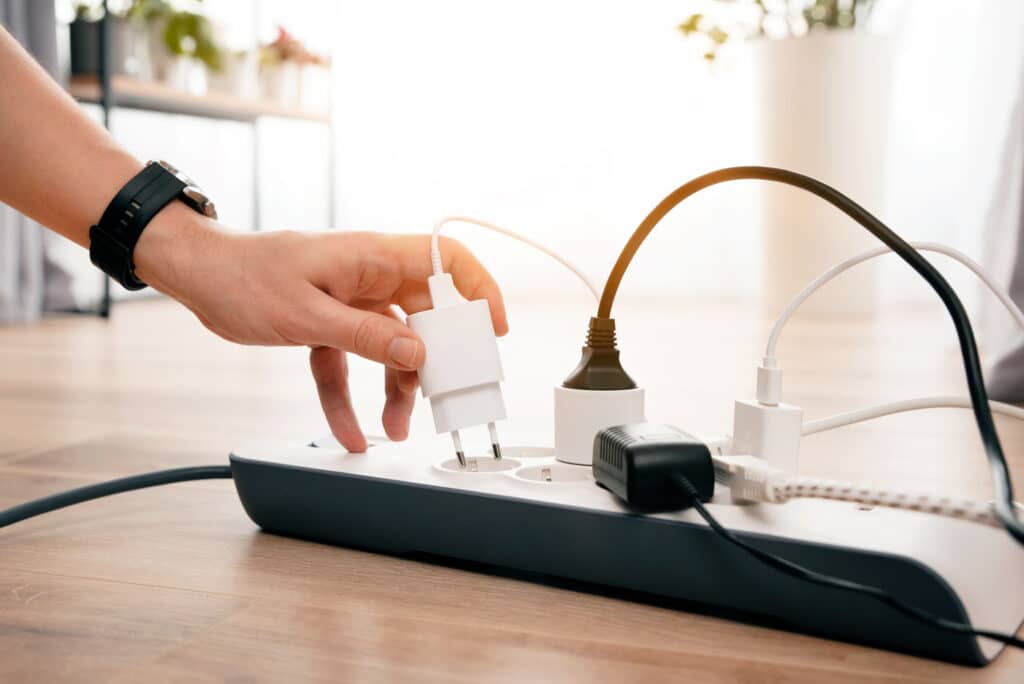
Using a power surge strip for protecting your smaller electronics may also be helpful, even with a whole-home surge protector. Be sure to use high-quality power surge strips for the best protection.
A power surge protector strip is more than an extension cord with several outlets. The strip must also have a power surge suppressor to be functional in protecting electronics and small devices. Look for one that also has a high joule rating, and understand how many amps or watts it can handle. In addition, check the suppressed voltage rating.
While it seems simple to just stop by the hardware store and pick up a surge protector strip, it would be wise to speak to someone who specializes in electronics and power surge protection to ensure you get the right amount of protection for your unique needs.
Affordable Ways to Protect Your Appliances and Electronics From a Power Surge
If you don’t have a whole-home power surge protector, consider unplugging your appliances, power strips, and extension cords as soon as the power goes out or in anticipation of a power outage. Keep in mind that it’s not when the power goes out that causes damage, it’s when the power is restored and the spike in electrical current rushes in and can overload the system. You may also have to reset circuit breakers after the power surge. It’s smart to have an electrician assess any potential damage to your home’s power system before plugging in appliances or electronic devices.
What Do I Do If My Appliances Don’t Work After a Power Surge?
If your surge suppressor did not prevent damage to your appliances, you may still be able to have them repaired instead of replaced. Most of the damage to appliances from the overload of the electrical current is in the control board. Your local appliance repair technician can change the control board and get the unit working again. Damage to electronics is a bit more sensitive. Some repair technicians can fix the circuit board in many electronics. If not, you’ll have to replace the electronic device.
Does My Insurance Policy Cover Damage From a Power Surge?
If your appliances and electronics become damaged due to a power surge, what are your options? Carefully read your insurance policy to see if you have coverage for storm damage. You will need to have a qualified technician assess the damage and record it for proof of storm damage. In addition, you’ll need to show proof of ownership of the device to receive potential compensation from the insurance company.
Preparing for a hurricane by unplugging appliances and devices is the best way to protect them. Consider getting a whole-home surge protector and high-quality power surge strips. Check your insurance policy to see if you have coverage for appliance and electronic device damage due to a power surge.