
If you live in a hurricane-prone area like Tampa or Southwest Florida, you’ll already know how important it is to add layers of protection to your home to avoid storm damage. Hurricane shutters are one of the best ways to do this. These window coverings act as physical barriers to stop strong winds and flying debris from entering and damaging your home.
But there are so many types of hurricane shutters out there. How do you know which one is best? This guide explores the different types of hurricane shutters, their benefits, and the pros and cons of each type to help you decide.
Why Hurricane Shutters Matter
Windows and doors are the most vulnerable points during a hurricane. When they break, strong winds and water can get inside and wreak havoc on your home and pose a safety risk. Hurricane shutters act as a protective barrier to prevent or limit the amount of flying objects or shattering glass that may get inside.
Shutters may also be useful outside of hurricane season. Many shutters can improve your home’s energy efficiency by blocking out heat and sunlight. Some models may even qualify for insurance discounts if they meet local building codes and certifications such as the Florida Building Code (FBC) or Miami-Dade County standard.
Types of Hurricane Shutters
You’ll find a variety of hurricane shutters on the market.
Accordion Shutters
Accordion shutters are some of the most common types of shutters in Florida. They have vertical panels mounted on either side of the windows or doors. You can close them with a switch or automatically when it gets too windy. The panels will then slide together like an accordion to cover the openings.
Pros:
- Quick and easy to use.
- Doesn’t need storage space.
- Always ready.
- Strong protection.
- Relatively affordable.
Cons:
- Bulky.
- Don’t suit all home styles.
Best for: Homeowners looking for an affordable permanent shutter that can be deployed quickly.
Roll-Down Shutters
Roll-down shutters are stored in a box above the window or door. When you need them, you can roll them down along tracks to cover the openings. You can motorize them to deploy at the touch of a button.
Pros:
- Simple and modern look.
- Covers the whole window or door.
- Can be motorized.
- Offers extra security year-round.
Cons:
- More expensive.
- Requires professional installation.
- Large openings may need reinforcing rods.
Best for: Homeowners who want extra protection with easy and often automatic deployment.
Panel Shutters
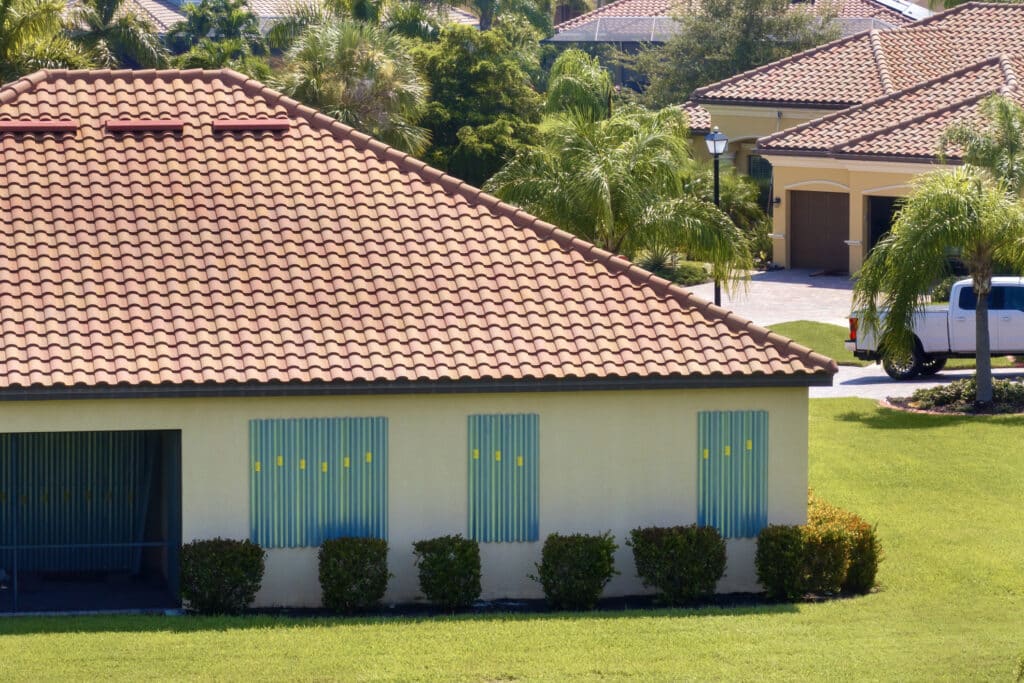
Panel shutters are made up of steel or aluminum panels that are stored separately and mounted over windows or doors when needed, using tracks or bolts.
Pros:
- Affordable.
- Can be custom-made for different window sizes.
- Durable and strong.
Cons:
- Requires storage space.
- Time-consuming to install during a storm (needs advance warning).
Best for: Homeowners looking for an affordable option who are willing to install panels manually as and when needed.
Bahama Shutters
Bahama shutters are permanently mounted shutters on top of the window. They have louvers to let in light or add shade. They can be closed and fastened when needed.
Pros:
- Provides storm and sun protection.
- Attractive look.
- Easy to close when needed.
Cons:
- Cheaper versions may not be as durable as other types.
Best for: Homeowners who want a stylish shutter that offers some storm protection and year-round shade.
Colonial Shutters
Colonial shutters are located on both sides of the window. You can swing them closed and lock them when a storm approaches. These shutters look like traditional decorative shutters.
Pros:
- Classic and attractive.
- Provides shade and storm protection.
- Permanently installed and easy to use.
Cons:
- Not suitable for all window sizes.
- Protection varies by quality.
Best for: Homeowners who want a more traditional-styled shutter with practical storm protection.
Plywood Shutters
Plywood shutters are the cheapest option. They are made out of thick plywood panels you can fasten over windows and doors before a storm.
Pros:
- Cheap and DIY-friendly.
- Readily available.
Cons:
- Heavy and awkward to install.
- Requires storage space.
- Less durable and less aesthetically pleasing.
- Not recommended for long-term or repeated use.
Best for: Emergency or short-term protection when you don’t have access to other options.
Important Considerations When Choosing Hurricane Shutters
Not all shutters are made equal. Here’s what to keep in mind.
Certification and Building Codes
In hurricane-prone states like Florida, shutters must meet strict standards, such as those outlined in the FBC and Miami-Dade County regulations. Certified shutters have been tested to withstand Category 4 or 5 hurricane conditions. Always choose certified shutters, as they’re the safest and qualify for insurance discounts.
Insurance Benefits
Many insurance companies offer discounts for homes with certified hurricane shutters. However, policies vary. Some insurers require permanent installation, while others may not cover removable panels. Always check your provider’s specific requirements.
Ease of Use and Maintenance
You’re more likely to benefit from shutters that are easy to use and maintain. For example, you can use roll-down and accordion shutters quickly, while panel shutters take more effort. Regular maintenance extends their lifespan and ensures they’ll work during storms.
Aesthetics
As permanent shutters are visible all year-round, you’ll want to think about how they match your home’s style. Bahama and colonial shutters add charm and extra shade, while roll-down and accordion shutters offer a more modern, utilitarian look. Some homeowners may prefer shutters that blend in.
Budget and Installation
Costs vary depending on the type of shutter, material, and installation. Roll-down shutters tend to be the most expensive, while plywood is the cheapest. Professional installation is recommended for most types, except plywood, which you can do yourself. Think about the long-term durability and potential insurance savings when comparing costs.
Maintenance Tips for Hurricane Shutters
Here are some tips for taking care of your shutters to protect your warranty and ensure they work when a storm hits:
- Open and close the shutters at least once a month to prevent sticking and to keep tracks clear.
- Apply graphite or wax spray two to four times a year to lubricate the tracks.
- Check for dents, rust, or loose screws and fix them ASAP.
- Clean them regularly to avoid rust and corrosion.
Choosing a Shutter
Choosing the right hurricane shutters is key for protecting your home during hurricane season. Consider your budget, ease of use, aesthetic preferences, and local building codes when comparing accordion, roll-down, panel, Bahama, colonial, or plywood shutters. Certified shutters provide proven protection and may lower your insurance premiums. But remember, hurricane shutters are an investment. Choose wisely and they will protect your property, family, and peace of mind every storm season.